
Staying compliant with I-9 employment verification requirements is essential for every organization. For HR professionals managing a workforce across multiple locations, maintaining I-9 compliance can present significant operational challenges. Whether you’re onboarding a handful of new employees or hundreds, the way your team manages Form I-9s can determine the difference between a seamless audit and costly penalties.
The Form I-9 is a simple two-page document that can be surprisingly easy to get wrong. Decentralized I-9 management, where individual locations handle the form independently, often leads to inconsistent procedures, higher error rates, misfiled or incomplete records, and increased ICE audit exposure. Fines for I-9 violations can range from hundreds to thousands of dollars per form, depending on the severity of the infraction.
So, how can HR teams avoid common compliance errors and stay ahead of regulatory expectations? It ultimately begins with centralized I-9 management.

Here's What You'll Learn
What Is Centralized I-9 Management?
Simply put, centralized I-9 management means consolidating all Form I-9 records, processes, and compliance checks into one secure system, or assigning them to a centralized team.
This approach creates a standardized and company-wide workflow that makes sure every new hire, regardless of location or work arrangement, follows the same compliant onboarding process.
What are the Key Components of a Centralized System?
There are 3 main parts of a centralized I-9 system, including:
- Digital storage and tracking: With a centralized system, you no longer have to deal with paper forms in filing cabinets. Digital systems offer secure, cloud-based access to every I-9, complete with audit trails and embedded check and balance features. You can view Form I-9s for all employees, across all locations, in one system.
- Standardized workflows across locations: Everyone follows the same steps, supporting consistency and reducing the chances of critical and costly mistakes.
- Integration with payroll and HR systems: Seamless data sharing helps HR teams streamline the onboarding process, reduce duplication of efforts, and ensure accurate employment records.
Why Centralized I-9 Management Is Important
Centralization is a strategic imperative. It’s no longer just a “nice to have” anymore. Here’s why:
- Mitigates Audit Risk: With a centralized system, I-9s are completed accurately and stored securely. That means you're always audit-ready and can respond to requests from Immigration Customs Enforcement (ICE) or Department of Homeland Security (DHS) without scrambling to pull documents from multiple locations. This is incredibly important since you usually only have 3 days to pull documents when you receive a Notice of Inspection (NOI).
- Reduces Errors: Decentralized processes often lead to human errors, such as missing signatures, incorrect dates, or expired document types. A centralized team or platform can include expert oversight and frequent compliance checks.
“When someone only completes I-9s every few months, they simply don’t build the same muscle memory or understand the “ins and outs” of the form as someone who completes them on a more regular basis,” says Desiree Throckmorton, MA, SPHR, Senior Consultant with OutSolve. “That familiarity makes all the difference and is key when it comes to catching errors and staying compliant.” - Streamlines Onboarding: Standardizing the I-9 process across your organization improves the overall onboarding experience for both HR and new hires. No more confusing back-and-forth about which documents are acceptable or how to complete Section 2.
- Supports Remote and Hybrid Teams: Remote work is here to stay. A centralized system allows you to stay compliant regardless of where your employees are located, thanks to remote verification tools and consistent oversight.
- Enhances Reporting and Oversight: Need to pull a report on upcoming reverifications? Want to know which locations are behind on compliance training? A centralized system gives HR leaders real-time visibility into I-9 status across the entire organization.
The Hidden Pitfalls of Decentralized I-9 Management
Let’s talk about decentralized I-9 management. While decentralized systems might seem more convenient on the surface, letting each location manage its own forms, the hidden costs are significant. Some examples include:
- Disparate systems and inconsistent processes often result in varying degrees of compliance.
- Misfiled or incomplete I-9s go unnoticed until an audit makes them visible.
- Expiration dates and reverification requirements are easy to miss without centralized alerts.
- Mergers and acquisitions complicate things even further, with multiple systems and standards to reconcile.
- Training gaps mean that staff completing I-9s may not be up to date with the latest regulations.
All of this creates unnecessary risk, inefficiency, and too much time being reactive rather than proactive.
How to Implement Centralized I-9 Management
Ready to make the switch? Here’s a simple step-by-step process to help you centralize your I-9 process:
Step 1: Assess Current Processes
Evaluate how your organization currently handles I-9s across departments and locations. Identify inconsistencies, technical gaps, and compliance risks.
Step 2: Select a Centralized Platform or Team
Choose whether you’ll invest in a digital I-9 management platform, a full-service I-9 verification provider, or designate a specialized internal team responsible for processing all I-9s. If you decide to use a digital I-9 management platform, review all the features to ensure compliance.
Step 3: Standardize Workflows
Document a consistent process for completing, reviewing, and storing I-9s. Include policies for remote verification and reverification.
Step 4: Train Your HR Team
Make sure everyone responsible for onboarding understands the new workflows and is trained in Form I-9 requirements. Refresher courses should be mandatory for anyone involved in the I-9 completion and compliance process.
Step 5: Monitor and Refine
Set up regular self-audits to identify potential issues early. Continuously improve your process based on regulatory updates and team feedback.
Organizations that centralize their I-9 management experience:
- Reduce compliance risk and have fewer chances of costly fines
- Save time and money by eliminating duplicate efforts and error correction
- Increase audit preparedness with instant access to accurate records
- Improve onboarding experience for new hires and HR staff alike
- Expand scalability to support business growth, mergers, or geographic expansion
In short, it’s an investment that pays off in maintaining compliance, operational efficiency, and peace of mind.
What Centralizing I-9 Management Means for Your Organization
As enforcement efforts increase and remote work grows, decentralized I-9 management simply isn’t sustainable. A centralized system not only protects your company from compliance risks, but it also allows your HR team to operate more efficiently, confidently, and strategically.
At OutSolve, we understand how high the stakes are. That’s why we offer a secure, and fully compliant I-9 solution designed to support growing and multi-location companies. From digital verification to real-time tracking and seamless integrations, our platform makes it easy to stay compliant, without the paperwork headache.
Want to learn more about how our I-9 solution can support your organization? Contact us today and schedule a demo.



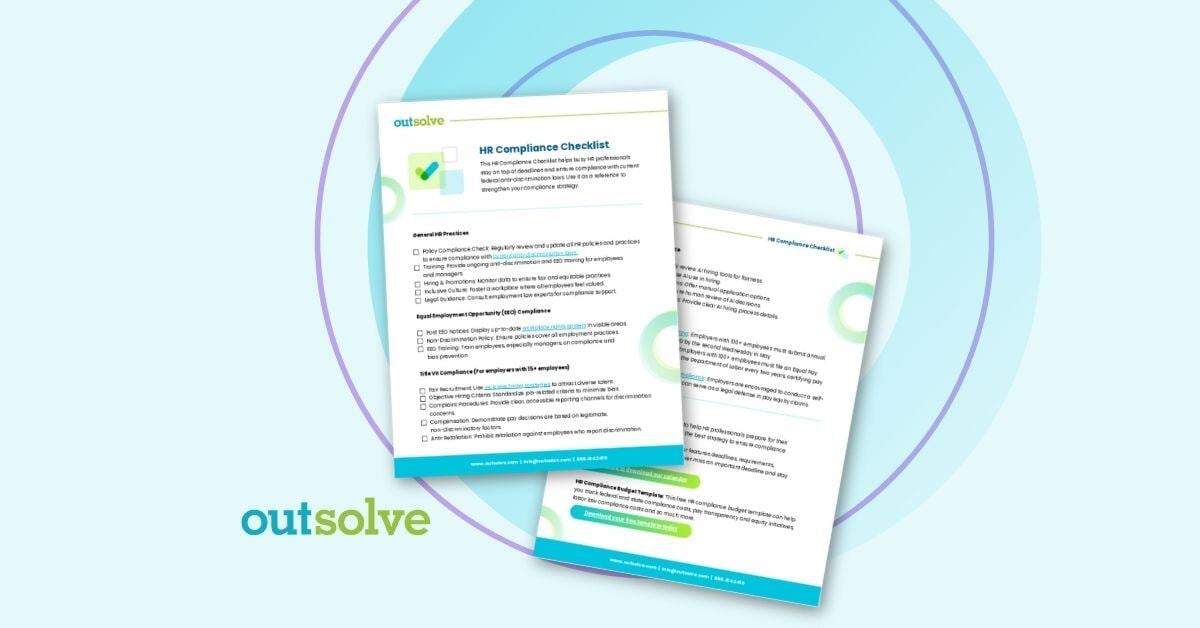
HR Compliance Checklist: What Every HR Pro Needs to Know
 Vickie LeNormand: Oct 13, 2026, 10:45:00 AM
Missing even one HR Compliance requirement can expose your company to costly penalties, legal claims, government audits, and reputational damage....

Joint Employer Liability and Compensation Compliance: Businesses Need to Watch Pay Practices Closely
 OutSolve: Oct 8, 2026, 10:17:00 AM
This article is part of an ongoing legal series designed to provide insight and practical guidance on current and emerging workplace compliance...

OutSolve's Beth Montgomery Named a 2026 Women Leader in Consulting
 Mary Madden: Oct 6, 2026, 8:57:09 AM
Beth Montgomery has been named an Industry Specialization Leader in Consulting Magazine's 2026 Women Leaders in Consulting Awards. The honor...