







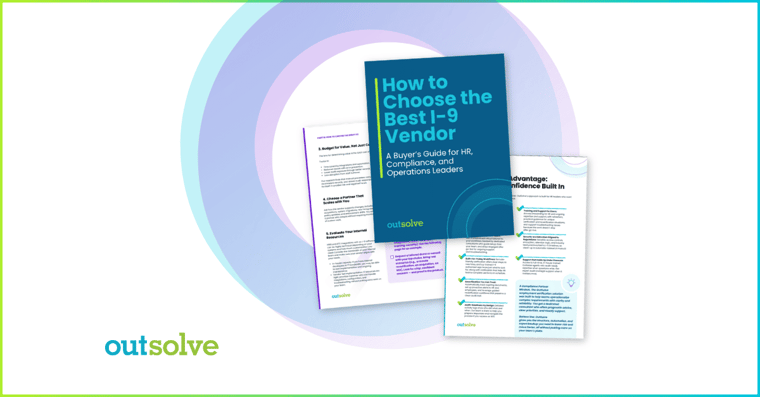
Vetting vendors and partners for Form I-9 services is one of the most important decisions HR and compliance teams make, especially when it comes to immigration and workforce compliance processes. The right partner can reduce risk, improve audit readiness, and simplify employee verification workflows.
Given the increase in immigration enforcement, Form I-9 compliance has skyrocketed to a top priority for HR. This I-9 Buyers Guide helps you go beyond the demo and evaluate vendors based on their operational capability. We give you the exact questions to ask so nothing slips through the cracks.

Top Takeaways for HR
- You must look past the "demo" to evaluate a vendor’s actual capability in handling high-risk scenarios, such as the step-by-step workflow for managing E-Verify Tentative Non-confirmations (TNCs) and remote Section 2 verifications.
- To avoid gaps in your defense during an audit, you must clarify exactly where the vendor’s obligations end and your team’s begin, specifically regarding who is accountable for "judgment calls" on document authenticity and timing.
- A compliant vendor should be able to demonstrate a clear "Notice of Inspection" (NOI) playbook, including the ability to produce timestamped audit trails and exportable data packages that prove your organization's good-faith compliance efforts to ICE.
Key Questions to Ask When Vetting Vendors
Knowledgable, experienced vendors will answer in specifics, not in generalities or empty promises. Use the following questions to go beyond the demo when evaluating I-9 vendors.
- “How quickly can we get up and running?”
Seek a realistic implementation plan with milestones, owner roles, and data mapping. Expect a range of options based on company size and complexity. For example, ask how they manage implementation and onboarding. - “What level of training and onboarding is included?”
You want training for HR and authorized reps on both the software itself and processes, plus refreshers for new team members. - “Who is responsible if something goes wrong?”
Clarify where vendor obligations end and your teams begin. Good partners will be transparent about shared responsibilities and provide guidance when judgment calls are required. - “How do you conduct your remote employee verifications for Section 2?”
Ask them to walk through the precise workflow, including roles, identity/document capture, timing prompts, and how the system preserves the completed document. - "Can your system accommodate employees who are remote?”
Ask them if their software and system are mobile-friendly? Can employees complete Section 1 from their mobile device? - “How do you track and notify us about upcoming reverifications?”
Ask to see real-life alerts and thresholds (e.g., 90/60/30-day prompts), role-based notifications, and reporting views that keep managers ahead of deadlines. - “How do you manage E-Verify and Tentative Non-confirmations (TNCs)?”
Ask how their system handles case creation, status tracking, and especially TNCs. Strong vendors will guide you step-by-step through employee notification, documentation, and resolution timelines so you stay in compliance and avoid procedural missteps. - “What happens if ICE audits us?”
Look for a clear, step-by-step outline of their audit support: export packages, timelines, and correction windows. They should also explain what they will do versus what you need to do. Strong answers will reference standard phases of inspection (NOI, compliance review, outcomes) and explain how their audit trail helps demonstrate good-faith compliance.
What Strong Vendor Responses Should Tell You
When evaluating responses to the questions above, you’re not just listening for features. You’re also listening for proof of operational ability, compliance expertise, and accountability.
Vendors that truly function as compliance partners (not just software providers) will be able to clearly explain how their processes work in real-world scenarios, especially under audit pressure.
What Vendor Vetting Means for Your Organization
Strong vendor vetting is ultimately about protecting your company from compliance risk while ensuring your HR team has the tools and support needed to implement correctly. The right vendor should act as an extension of your compliance function, not just a technology provider.
This is where an HR compliance as a service (HR CaaS) becomes especially valuable, helping companies move from reactive compliance management to structured and audit-ready operations that’s built on clarity and accountability. Download our complete I-9 Buyers Guide for help.

Additional I-9 Resources

Comments