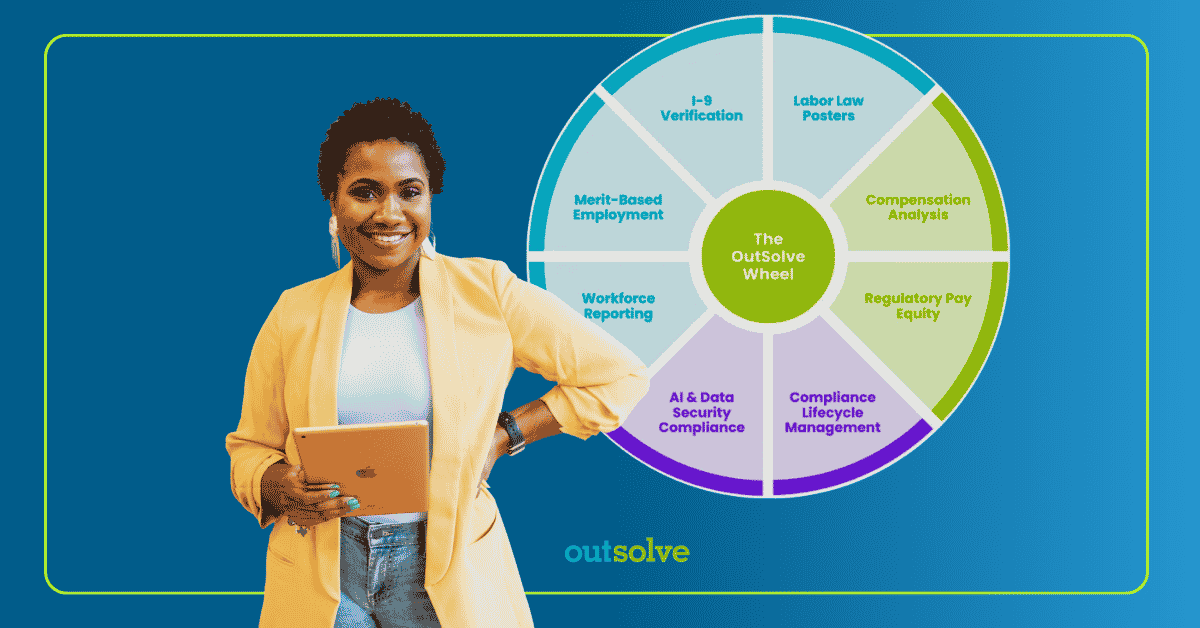
HR continues to manage both people and increasingly complex compliance requirements. Between new and changing regulations and growing business demands, keeping everything compliant has become a full-time challenge. That’s why many companies are considering making the switch to an HR Compliance as a Service (HR CaaS) partner as a smarter, more sustainable approach.

Top Takeaways for HR
- Relying on a disconnected mix of spreadsheets, various software tools, and reactive legal counsel often leads to data inconsistencies and coverage gaps that only surface during a high-stress audit or litigation.
- As regulations accelerate at the federal, state, and local levels, expecting HR generalists to maintain expert-level compliance while managing recruiting and culture is becoming an unsustainable business risk.
- Unlike traditional consulting, which is often reactive and project-based, the HR CaaS model provides a scalable, ongoing framework that allows HR leaders to focus on their people while ensuring the organization remains "audit-ready" at all times.

The Growing Weight of HR Compliance
For many HR teams, compliance has quietly become one of the most resource-intensive parts of the job. What used to be a manageable set of federal and state requirements now spans multiple regulatory layers, including:
- Federal labor and employment laws
- State specific workplace regulations
- Local ordinances that may differ city to city
- Industry specific requirements
- Reporting obligations and audit readiness
On top of all that, these regulations aren’t static. They’re increasing and changing faster than ever. And if you are a multi-location operation, keeping up with the intricacies of these laws can be time consuming and a regulatory risk.
Regulatory Changes Are Accelerating
HR Compliance laws are influenced by multiple factors including executive orders, employment trends, and changes at the federal government level.
For companies operating across several states, the complexity multiplies quickly.
The Stakes Are High
Compliance gaps can carry serious consequences including:
- Regulatory penalties and fines
- Legal liability or litigation exposure
- Reputational damage
- Business disruption during investigations or audits
The pressure on HR is constant and staying compliant isn’t optional. Being proactive and keeping up with every change internally continues to be increasingly difficult and time intensive.
The Challenge with Doing Compliance In-House
Most HR teams are incredibly capable, but they’re often structured as generalists, not dedicated compliance specialists. Plus, they have a slew of other tasks that keep them busy from clock-in to clock out.
Recruiting, onboarding, employee relations, performance management, benefits administration, and culture initiatives already fill your HR calendar. Adding continuous regulatory monitoring and compliance infrastructure on top of those responsibilities stretches HR thin.
Common In-House Compliance Pitfalls
Even the most efficient HR departments encounter challenges such as:
- Compliance responsibilities falling on already overloaded HR staff
- Knowledge gaps that often surface during audits or litigation
- Difficulty scaling compliance infrastructure during growth or restructuring
- Relying too heavily on one internal expert, creating a single “point of failure”
Small and Mid-Sized Organizations
In smaller organizations, HR departments are often made up of true generalists. Compliance may be just one of many responsibilities handled by a small team, or even a single HR professional.
These teams simply may not have the capacity to track every regulatory change or implement complex compliance frameworks, adding unnecessary risk to your organization.
Enterprise Organizations
Large organizations face different challenges.
Many have specialized HR teams, but compliance responsibilities may still be fragmented across departments. Even organizations with strong internal resources often discover gaps when an outside compliance expert reviews their processes.
In other words, not knowing about compliance gaps doesn’t mean they aren’t there.
HR IRL: An HR director at a fast-growing company believes compliance processes are solid, until an audit request reveals missing documentation across multiple states and locations.
Suddenly, HR teams are scrambling to reconstruct records, interpret regulations, and coordinate responses, all while maintaining their regular HR responsibilities.
This is the kind of scenario HR leaders are increasingly trying to prevent.
Why Piecemealing Compliance Doesn’t Work
Many organizations attempt to manage compliance by piecemealing together multiple tools, vendors, and services.
This approach often includes:
- One consultant for wage and hour issues
- Another vendor for federal reporting requirements
- HR software for recordkeeping
- Internal spreadsheets for tracking compliance deadlines
- Legal counsel for reactive litigation issues
- Manual forms in filing cabinets for I-9 management
At first glance, this approach can seem flexible and cost effective. But over time, it creates more complexity, confusion, and risk.
The Risks of Piecemealing HR Compliance
When compliance responsibilities are spread across multiple disconnected systems and vendors, organizations may experience:
- Inconsistent data across platforms, leading to reporting errors
- Coverage gaps when regulations shift or overlap between vendors
- Increased administrative burden coordinating multiple providers
- Lack of centralized documentation and audit trails
During regulatory reviews, this fragmentation can make it difficult to demonstrate compliance quickly and confidently.
HR Pro Tip: If compliance processes require pulling data from multiple systems, consultants, and spreadsheets, it’s usually a sign that your compliance infrastructure isn’t fully integrated.
That’s where centralized service models, like HR compliance as a service, can help.
What Is HR Compliance as a Service?
HR Compliance as a Service, or HR CaaS, is a model where companies partner with external experts to manage and oversee their compliance programs through an integrated service framework.
Instead of relying on scattered tools or reactive consulting engagements, HR CaaS provides ongoing, structured compliance support. An expert partner may be better able to spot compliance gaps than the HR team who works day-to-day in the same system.
What HR CaaS Typically Covers
While services vary by provider, HR CaaS commonly includes:
- Regulatory monitoring and compliance updates
- Policy and process development
- Affirmative Action planning and reporting
- Pay equity and workforce analytics
- Audit preparation and documentation management
- Compliance training and guidance
- Ongoing HR consulting support
Most importantly, HR CaaS is tailored to your organization’s needs, including company size, industry requirements, and geographic footprint, and can be scaled up as your organization grows.
A multi-state enterprise may need sophisticated compliance infrastructure, while a mid-sized company may need guidance establishing strong foundational processes.
“The biggest shift we’re seeing is HR leaders realizing compliance isn’t a one-time project; it’s an ongoing operational responsibility. HR CaaS provides the expertise and infrastructure organizations need to stay ahead of regulatory changes instead of reacting to them,” Jason Rodrigues, OutSolve VP of Sales.
The Benefits of Switching to HR CaaS
For many companies, moving to an HR CaaS model delivers both operational and strategic advantages. Let’s take a look at some of the key benefits.
Expert Oversight with Consultant-Led Service
HR CaaS provides access to specialized compliance expertise without requiring organizations to build large internal compliance teams.
This includes consultants who track regulatory changes and help translate them into practical HR actions and deliverables for employers.
Reduced Compliance Risk
With dedicated experts monitoring regulatory developments and maintaining documentation, companies are far less likely to encounter:
- Unexpected compliance gaps
- Missed regulatory updates
- Incomplete reporting
Cost Efficiency
Building a fully staffed internal compliance team can be expensive.
HR CaaS allows companies to access high-level expertise on demand, often at a lower cost than maintaining multiple internal specialists or external vendors.
Time Back for HR
Perhaps the biggest benefit for HR is simply getting time back.
Instead of spending hours tracking legislation, managing documentation, or coordinating vendors, HR teams can refocus on:
- Talent strategy
- Employee experience
- Leadership development
- Workforce planning
- Other overarching workforce initiatives
Audit Ready Infrastructure
One of the biggest advantages of a centralized compliance model is consistent documentation and audit readiness. When regulators request information, organizations can quickly access clear records and reporting.
Data-Driven Decision Making
HR CaaS also improves workforce visibility.
Integrated compliance systems allow HR to access insights about:
- Workforce demographics
- Pay equity trends
- Hiring patterns
- Organizational risk areas
These insights help you move beyond reactive compliance toward proactive workforce strategy.
What HR Compliance as a Service Means for Your Organization
Whether you lead HR at a 200-person company or a 20,000-person enterprise, compliance complexity is growing.
The question isn’t whether compliance matters, it’s how companies manage it effectively without overwhelming HR teams.
For many organizations, HR CaaS offers a practical solution that the top leaders are recognizing and switching to:
- Centralized compliance expertise
- Scalable infrastructure as the organization grows
- Reduced regulatory risk
- More strategic focus for HR leaders
HR leaders who are thinking and planning strategically are recognizing that compliance isn’t just a requirement. It’s a foundation for sustainable organizational growth. Partnering with an HR CaaS provider, such as OutSolve, will help you stay on track and organized when it comes to your compliance strategy. Contact us today to discuss how we can help you get started.





Best Practices for HR: AI in Recruiting
 Renee Arazie: Sep 23, 2026, 1:29:28 PM
Artificial intelligence (AI) continues to change how HR teams approach recruiting, streamline processes, improve efficiency, and make more informed...
E-Verify’s Status Change Report Require Employer Attention
 Alissa Horvitz: Sep 22, 2026, 8:00:00 AM
U.S. Citizenship and Immigration Services (USCIS) recently published additional frequently asked questions (FAQs) regarding the E-Verify Status...
ICE Notice of Inspection: HR Response Checklist
 OutSolve: Sep 21, 2026, 11:42:30 AM
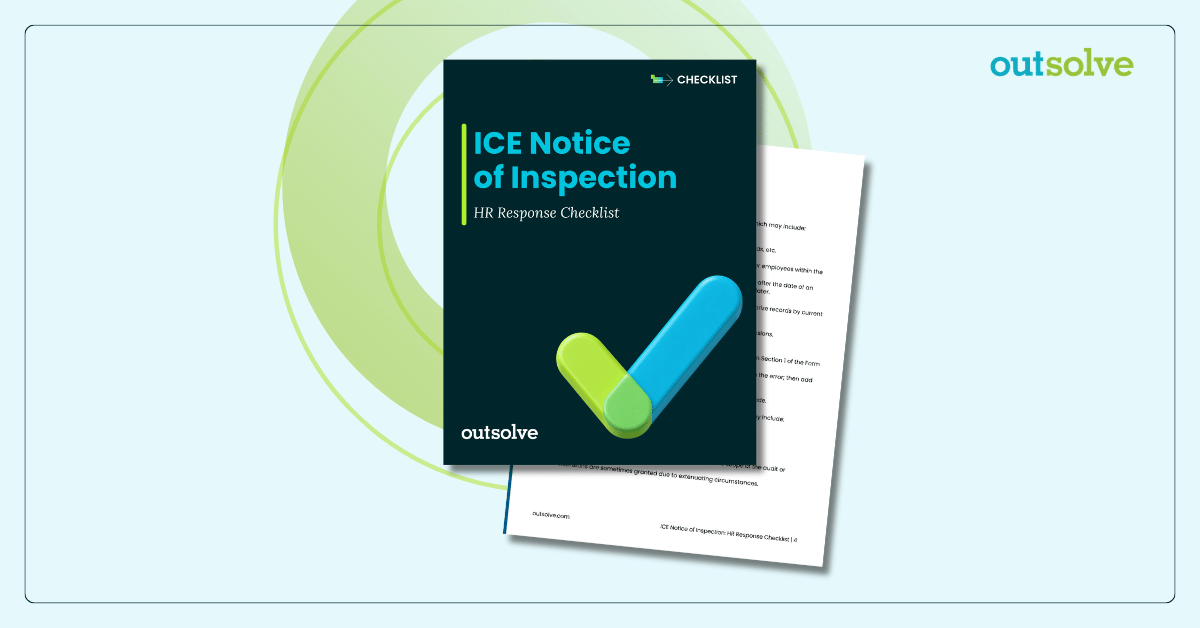
When ICE issues a Notice of Inspection, you generally have three business days to respond. That timeline alone can make the process overwhelming and...