Growing a business is exhilarating. New markets open, revenue increases, and your team expands. While there are many positive aspects, growth can often come with challenges and growing pains, like pushing your company’s infrastructure to the limit, especially your HR team.

Top Takeaways for HR
- The symptoms of an unscalable HR department – From operational overload to declining employee experience, learn how HR obstacles can slow your growth.
- The hidden dangers of decentralized HR – Discover why spreadsheets and ad-hoc processes are risky as your company expands.
- The business impact of HR stagnation – Understand how unscalable HR can affect customers, revenue, culture, employee retention, and strategy.
- Strategies for scaling HR – Explore practical steps for scaling, including digital transformation, process standardization, workforce planning, and outsourcing key functions.
- Why HR consulting partners matter – Learn how experts like OutSolve can help you scale efficiently without sacrificing compliance.
The Symptoms of an Unscalable HR Department
Even a high-performing HR team can stall, and function improperly, if the processes that they support aren’t designed for scale. Here are the most common warning signs that an HR team needs help scaling:
Operational Overload
Processes that worked for 50 employees, like spreadsheets, paper files, emails, and manual approvals, aren’t efficient when you are talking about hundreds of employees. HR ends up spending more time being reactive and tracking information than partnering with their workforce and driving strategy.
Recruitment Lag
Slow hiring can block company growth. If your company needs 20 new sales reps to reach quarterly targets, but HR can only source five per month, then revenue goals may slip. HR teams only have so many hours in the day to get everything done, and some tasks will start to take a back seat.
Compliance Risks
As headcount increases, so does regulatory scrutiny and complexity. Human error and issues increase as your workforce grows, specifically when it comes to tracking I-9 forms, pay equity, and benefits eligibility issues. A single mistake can lead to fines, audits, and reputational damage.
HR Pro Tip: Audit your current workflows and processes on a consistent basis. If you and your HR team are spending more than 40% of your time on administrative tasks, then it’s time to rethink your systems and consider outsourcing.
The Hidden Dangers of Decentralized HR
Many small companies rely on decentralized methods like spreadsheets, files on shared drives, and email chains. These may work initially but can become liabilities at scale.
The "Ad-Hoc" Trap
Decentralized processes fail as your company expands across state lines or grows beyond a few dozen employees. Without standardized procedures, every HR task risks becoming inconsistent, delayed, or error-prone.
Data Integrity Risks
Older or outdated systems can create inaccurate or outdated HR data. Poor data integrity leads to flawed reporting, which undermines strategic decision-making and increases compliance risks.
The Need for a Central Source of Truth
Scalable organizations centralize HR data in one secure system. Centralization helps ensure consistency, reduce errors, and provides visibility across teams and locations. It’s the nucleus of scalable HR solutions.
The Business Impact of HR Stagnation
Failing to scale HR processes has real consequences, including:
-
Stalled Revenue Goals: Unfilled roles mean work doesn’t get done. If HR can’t keep pace with hiring needs, then your business goals and objectives are at risk.
-
Cultural Breakdown: Rapid growth without scalable processes for onboarding, performance management, and recognition chips away at your company culture. New hires may feel disconnected from your company’s core values.
-
Retention Issues: High turnover can often trace back to inadequate HR support. Employee turnover and replacing employees is costly and slows momentum, particularly in key roles.
-
Strategic Disconnect: If HR is tied up in administrative tasks, then they can’t contribute to long-term strategic planning. As a result, the C-suite can lose critical insights about talent, workforce trends, and compliance risks.
Strategies for Scaling HR
Scaling HR isn’t just about adding headcount. It’s about smarter processes and technology built to grow your organization. Let’s look at four effective processes you can incorporate:
1. Embrace Digital Transformation
The bottom line is that manual data entry, spreadsheets, and paper processes don’t scale. Integrated HRIS systems automate payroll, benefits enrollment, and employee records management.
Remember that technology isn’t just about speed, but it helps confirm accuracy and data integrity at scale. Automating routine tasks frees HR to focus on strategy and employee experience.
2. Standardize and Document Processes
Institutional knowledge, or HR information known by only one person, is a risk. Standard operating procedures (SOPs) for recruitment, onboarding, offboarding, performance management and other key HR functions help support consistency and fairness.
3. Shift from Reactive to Strategic
Move from “firefighting” to proactive workforce planning. Anticipate hiring needs six to twelve months ahead and proactively use data analytics to spot trends in turnover, discrimination, or engagement.
Action Item: Track early warning signs of disengagement or compliance gaps to address issues before they become crises.
4. Outsource Non-Core Functions
Not every HR task needs to be handled in-house. Specialized compliance, tax matters, and complex legal requirements can be managed by external partners. This allows your internal HR team to focus on culture, talent, and strategy.
HR Pro Tip: Document every HR process, even small ones, and retain that documentation. This protects your organization and prepares your team for scale.
Why You Need an HR Consulting Partner
Even the most capable internal HR teams can struggle with compliance and scale simultaneously. Here are some ways an HR consulting partner or HR compliance as a service (HR CaaS) provider can help:
-
Complexity vs. Capacity: Daily employee relations, recruitment, and compliance demands often stretch internal teams thin. Staying current with regulations requires expertise and bandwidth that in-house teams may lack. An external HR compliance partner can provide you with those services.
-
Scalability Through Partnership: A consulting partner allows your organization to “rent” deep HR expertise without hiring a large compliance department. HR CaaS providers, like OutSolve offer scalable HR solutions that grow with your business.
-
Expertise on Demand: Partners provide peace of mind, making sure that compliance posture grows alongside your organization. This allows internal HR to focus on strategic initiatives without sacrificing regulatory needs and requirements. You can rest assured that your HR compliance partner is up-to-date on all the latest regulatory requirements.
What Scalable HR Solutions Mean for Your Organization
Centralized, documented workflows and strategic partnerships are essential for sustainable growth. Scalable HR solutions help prevent bottlenecks, protect compliance, enhance employee experience, and free HR to be a true partner and drive business impact and strategies.
You don’t have to navigate growth alone. By assessing your current HR scalability and partnering with experts, your organization can confidently expand while maintaining compliance, culture, and momentum.
Evaluate your HR processes today. Contact OutSolve to explore how scalable HR solutions and HR Compliance as a Service can position your organization for long-term success.

FAQs
-
What are scalable HR solutions?
Scalable HR solutions are processes, systems, and partnerships designed to grow alongside your organization while maintaining efficiency, compliance, and employee experience. -
Why is centralized HR important?
Centralization helps ensure data accuracy, consistent processes, and visibility across the organization, which is critical for decision-making and compliance. -
How can technology improve HR scalability?
Digital HR systems automate routine tasks, reduce errors, and free HR to focus on strategic initiatives like culture, engagement, and workforce planning. -
When should a company consider outsourcing HR functions?
Outsourcing is valuable when specialized compliance or high-risk functions exceed your internal team’s capacity, or when you want to focus on strategic initiatives. -
How does HR impact business growth?
HR directly affects recruitment, retention, culture, compliance, and overall workforce efficiency. Scalable HR ensures these functions support, rather than hinder, growth. -
What is HR Compliance as a Service?
HR CaaS is a proactive, managed method to maintain continuous HR compliance management. This practice combines regulatory expertise with customer-forward managed services and unifies interconnected requirements in specialized areas.





Best Practices for HR: AI in Recruiting
 Renee Arazie: Sep 23, 2026, 1:29:28 PM
Artificial intelligence (AI) continues to change how HR teams approach recruiting, streamline processes, improve efficiency, and make more informed...
E-Verify’s Status Change Report Require Employer Attention
 Alissa Horvitz: Sep 22, 2026, 8:00:00 AM
U.S. Citizenship and Immigration Services (USCIS) recently published additional frequently asked questions (FAQs) regarding the E-Verify Status...
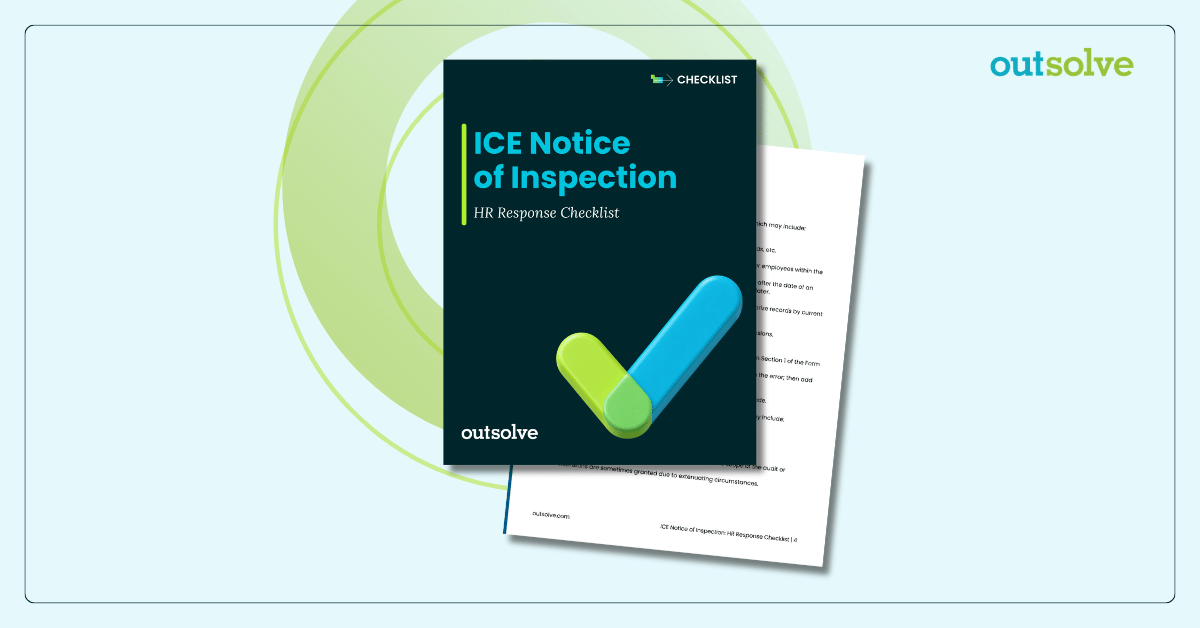
ICE Notice of Inspection: HR Response Checklist
 OutSolve: Sep 21, 2026, 11:42:30 AM
When ICE issues a Notice of Inspection, you generally have three business days to respond. That timeline alone can make the process overwhelming and...