
When it comes to HR compliance, one misstep or oversight could subject your company to fines, audits, or have a negative impact on the company’s reputation.
The good news? You can stay proactive all year long with a solid and structured 12-month compliance roadmap. This article walks you through building each step of that plan, so you can confidently focus on HR compliance over the entire year.

Here’s What You’ll Learn
Let’s get right into the details on the five main parts of how to build a 12-month HR compliance roadmap. Each section includes tips on when you might need a partner like OutSolve to reduce risk and workload.
Part 1: Inventory Your Compliance Obligations
The first step in building a 12-month roadmap is getting specific and knowing exactly what you need to do. Start with a simple inventory on the following key compliance items:
- Federal contractor obligations (AAP’s for VEVRAA and Section 503, VETS-4212, EEO-1)
- Company specific policies (handbooks, code of conduct, anti-harassment policies)
- State and local employment requirements (pay equity, leave laws, wage notices, pay transparency requirements)
- Internal governance (employee data integrity, reporting structures, retention schedules)
You may be asking, “What’s the output of all this?" The answer….a master checklist that will become the very foundation of your roadmap.
HR IRL: One HR manager told us, “Before mapping out deadlines, I had no idea how many state-specific posting requirements we were missing. Once we inventoried everything, the roadmap practically built itself.”
Here’s how OutSolve can help:
- Confirm what applies to your workforce, locations, contractor status, and risk profile.
- Help decide if your team can manage the burden of data gathering and reporting, or if you need expert support to make sure that nothing slips through the cracks.
HR Pro Tip: The key is to start small. Focus first on obligations with close deadlines or in the next quarter, then expand from there. This breaks down the process into more “bite-size” pieces and keeps the task from feeling overwhelming.
Part 2: Set Your Compliance Cadence
Now that you’ve defined what you need to do in part 1, the next step is to get more specific on the timing. Once again, a consistent process and good planning helps ensure that compliance doesn’t become a last-minute scramble.
Here is a suggested and repeatable timeline:
- Monthly: HRIS data check/cleanup, I-9 checks, documentation uploads, training completion
- Quarterly: Risk checks, policy updates, outreach tracking, compliance poster check, compensation reviews
- Annual: AAP cycle (Section 503 and VEVRAA), EEO-1 report submission, pay data reporting (where applicable), training schedules, compensation benchmarking
- Event-Driven: New hires, reorgs, acquisitions, office relocations, etc.
You could also add some “buffer weeks” before major deadlines to leave yourself some extra time for any unexpected delays.
Here’s how OutSolve can help:
- Build a rhythm customized to your company’s unique compliance cycle that doesn’t interfere or place more demands on your reporting season or busy HR periods.
- Create realistic lead times, so deadlines don’t coincide with major initiatives like open enrollment, budgeting, or seasonal hiring.
- Decide whether your team can realistically complete all required tasks or whether external support, like a compliance as a service provider, is necessary.
HR IRL: “When we tried managing quarterly reports on our own, deadlines always collided with performance reviews. OutSolve helped us reorganize so nothing overlaps.”
HR Pro Tip: Who doesn’t like a visual? Visual calendars with color-coded deadlines make it easy for your team to see “at a glance” what’s due each month.

Part 3: Assign Owners, Backups, and Approvals
When it comes to HR compliance, it takes a village! A roadmap is only as strong as the people behind it. Assigning clear roles to each task prevents misunderstandings and delays, all while promoting accountability.
Define roles for each of the following:
- Owner: Performs/executes the work
- Approver: Signs off
- Backup: Provides coverage
- Data steward: Confirms data integrity
How OutSolve can help:
- Provides a shared execution model, clarifying what your team owns, what OutSolve handles, and what is collaborative.
- Reduce slowdowns by standardizing inputs, so no more scrambling for missing forms.
- Helps identify gaps and determine where outsourced help may be needed.
HR IRL: “Before OutSolve, our comp reviews stalled because approvals went through too many hands. Now, everyone knows their role, and deadlines are met consistently.”
HR Pro Tip: Document every owner, backup, and approver in your roadmap. It will prove invaluable during audits or when team members are out or unavailable. Make sure to clearly communicate roles and responsibilities to those involved.
Part 4: Build Your Evidence Trail
Documentation is critical to your process and can be used for supporting documentation during any audits, legal challenges, etc.
Key documentation to maintain:
- Policies and training completion logs (retain prior versions as well)
- Outreach logs and postings (Section 503 and VEVRAA)
- Reporting confirmations
- Process documentation (how I-9s are stored and verified, etc.)
- Analysis summaries (compensation reviews, selection monitoring, pay equity analysis, job selection documentation)
- Audit trails (Form I-9 compliance)
Here’s how OutSolve can help:
- Establish documentation standards and “what good looks like.”
- Support audit readiness by producing clear and relevant documentation throughout the year, and not just after the fact, with the help of our I-9 management solution.
- Reduce the load on your HR team, who may not have time to document everything while managing daily responsibilities.
HR Pro Tip: Organize documentation by checklist category and date. This simplifies audits and internal reviews. Make sure keys players know where to find the documentation and who is responsible for updating it. With that said, restrict access to those on a “need-to-know” basis, as some of the documentation may include confidential employee or company data.
Part 5: Review, Update, and Optimize
As you know, HR compliance is fluid. Workforce changes, mergers, remote hiring, and market trends can all affect your obligations. This means you should review the roadmap on a regular basis.
Quarterly review your roadmap for:
- Organizational changes (growth, reorganizations, acquisitions)
- Workforce shifts (remote hiring, new office locations)
- Process changes (new HRIS/ATS, updated workflows)
- Compensation shifts (hard-to-fill roles, market movement)
How OutSolve can help:
- Perform periodic checks and updates to your roadmap, as needed.
- Support proactive decision-making instead of reactive scrambling.
- Help ensure nothing falls through the cracks, even in fast-paced work environments.
- Treat your roadmap as a “living and breathing” document, by supporting its growth with your business and regulatory environment.
Key Compliance Tools to Help Throughout the Year
A calendar and checklist can be helpful resources to keep yourself organized and proactive.
-
HR Compliance Calendar (“When” Tool)
-
Tracks deadlines to prevent surprises
-
Best practices: include task owner, due date, reminders, and proof requirements
-
-
HR Compliance Checklist (“What + Proof” Tool)
-
Turns requirements and obligations into repeatable tasks
-
Best checklists include inputs needed, expected outputs, evidence to save, and approvals
-
HR Pro Tip: Combine the calendar and checklist that makes compliance visual and actionable. As mentioned earlier, you can color code it as well.
How OutSolve Can Help You Execute Your Roadmap
As outlined above, partnering with OutSolve gives you and your team a compliance partner that supports accuracy, efficiency, and year-round audit readiness. OutSolve offers comprehensive support across HR compliance, including:
- Roadmap Build and Execution: Strategy, setup, and workflow alignment
- AAP Support: VEVRAA and Section 503 compliance
- Reporting Support: VETS-4212 Report, EEO-1 Report, state pay reports (process + documentation)
- I-9 Workflow Support: Retention governance and verification
- Compensation compliance: Benchmarking, pay equity analysis, documentation best practices, and pay transparency consulting
- Roadmap Maintenance: Quarterly review and optimization
What HR Compliance Means for Your Organization
Avoiding HR compliance mistakes requires planning, discipline, and the right partner. A 12-month roadmap provides clarity, accountability, and confidence that your company meets its regulatory obligations. Be proactive and start now. It will help you with both your short-term requirements and those for the remainder of the year.
Partner with OutSolve to help make sure that your compliance is proactive instead of reactive, so your team can focus on what matters most, which is your people. Contact us today for an initial consultation.

Related FAQs
-
How often should I review my HR compliance roadmap?
At least quarterly, and whenever business or regulatory changes occur.
-
Can a small HR team manage this on their own?
It’s possible, but many teams benefit from outsourcing to help with accuracy, to reduce risk, and to ensure you are following the most updated regulations.
-
What is the difference between a compliance calendar and a checklist?
A calendar tracks deadlines (when), while a checklist outlines tasks and documentation (what + supporting documentation). Both play an important role and can even be combined.
-
How does OutSolve help with documentation?
OutSolve establishes standards, helps prepare and file reports, provides consulting on compensation, stores documentation year-round, and helps teams remain prepared for audits.
-
What happens if I miss a compliance deadline?
Missing deadlines can result in fines, audit findings, or reputational risk, which is why a structured roadmap is essential.





Best Practices for HR: AI in Recruiting
 Renee Arazie: Sep 23, 2026, 1:29:28 PM
Artificial intelligence (AI) continues to change how HR teams approach recruiting, streamline processes, improve efficiency, and make more informed...
E-Verify’s Status Change Report Require Employer Attention
 Alissa Horvitz: Sep 22, 2026, 8:00:00 AM
U.S. Citizenship and Immigration Services (USCIS) recently published additional frequently asked questions (FAQs) regarding the E-Verify Status...
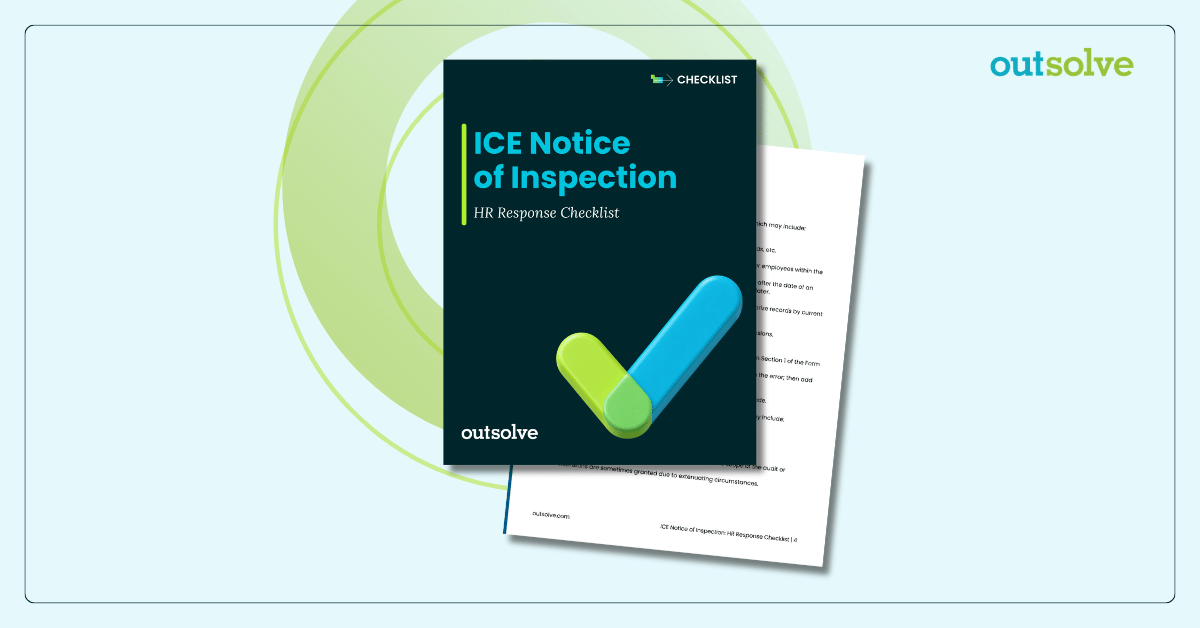
ICE Notice of Inspection: HR Response Checklist
 OutSolve: Sep 21, 2026, 11:42:30 AM
When ICE issues a Notice of Inspection, you generally have three business days to respond. That timeline alone can make the process overwhelming and...