








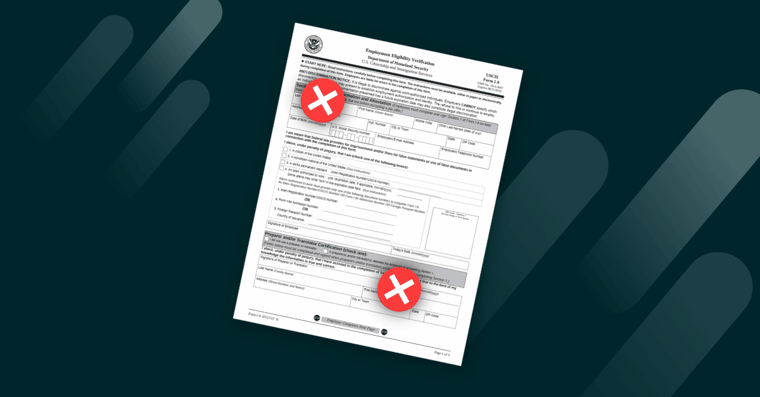
ICE has redefined some key Form I-9 errors from procedural or technical to substantive. What this means for employers is missing dates and information can lead to significant penalties if they were to be uncovered in an audit, making self-audits and a solid I-9 process even more imperative. The changes described in this blog from technical to substantive are currently in effect.

Top Takeaways for HR
- ICE has reclassified several previously "technical" or "procedural" errors such as missing hire dates, dates of birth, or preparer/translator information, as "substantive" violations.
- By expanding the definition of substantive violations, ICE is signaling a clear shift from leniency to strict enforcement.
- The updated guidance explicitly warns any electronic I-9 system that fails to meet strict standards for security, electronic signatures, and audit trails is now considered a substantive violation.
What Changed: Understanding ICE’s New Definition
In March 2026, ICE issued an update to their Form I-9 inspection fact sheet, shifting the framework of its enforcement and included information about changes to what’s considered a “substantive” violation.
Historically, I-9 errors and violations fell into the following two buckets:
- Technical/Procedural Errors – Often fixable without penalty if done within a set timeframe
- Substantive Violations - Significant errors subject to monetary penalties
ICE is now expanding what counts as "substantive," meaning more paperwork or clerical errors may lead to penalties—even if they were previously considered minor or fixable.
List of New Substantive Violations
So, what’s changed? Examples of errors that were once procedural or technical and are now considered substantive include:
- Missing date of hire
- Missing date of birth
- Missing title of the employer or authorized representative
- Failure to date Sections 1 or 2
- Failure to enter rehire, when applicable
- Incorrect use of Spanish language I-9 outside of Puerto Rico
- Preparer and/or translator errors
- Failing to check the alternative procedure box in Section 2, when applicable and verifying remotely.
- Failing to be enrolled in and in good standing with E-Verify if verifying remotely
- Using an electronic I-9 system that falls short of specific standards
Why This Matters: Increased Risk for Employers
The bottom line is that there is now the potential for higher penalties and a lower margin for error. With more violations classified as substantive:
- Fines can increase significantly
- Audit exposure expands
- Good faith compliance defenses may weaken
Increased Audit Activity
This change aligns with broader immigration enforcement trends we are seeing under the Trump administration such as more audits, more scrutiny on certain industries, and less tolerance for inconsistency.
How to Avoid Substantive Errors
Don’t wait for ICE to find issues. Organizations MUST proactively ensure Form I-9 compliance by standardizing processes and conducting self-audits.
Conduct a Proactive I-9 Audit
- Review all active and terminated employee I-9s
- Flag missing or inconsistent data
- Correct errors using proper remediation protocols
If you need help conducting a self-audit, download this Form I-9 Audit Checklist for a step-by-step guide.
Standardize Your Processes
Create repeatable workflows to ensure consistency such as:
- Use checklists for onboarding
- Train HR teams and other key players regularly
- Implement document verification best practices
HR Pro Tips: Remember the I-9 completion timelines are non-negotiable. Section 1 must be completed by the new hire on or before their date of hire, and Section 2 must be completed within 3 business days from hire. No exceptions.
Where HR Compliance as a Service Fits In
HR Compliance as a Service (HR CaaS) is a new way of thinking about managing your HR tasks. An HR CaaS provider helps HR teams with a proactive, holistic approach to their HR compliance and risk management, offering multiple solutions and services to satisfy their requirements.
An HR CaaS partner becomes valuable when it comes to Form I-9 compliance. Having a centralized, outsourced system for your management will help streamline processes and eliminate manual errors. Instead of reactive fixes, you get:
- Ongoing I-9 monitoring and self-audit help
- Expert guidance aligned with current ICE enforcement trends
- Scalable compliance processes as your workforce grows and changes
An HR CaaS partner can help you transform your Form I-9 compliance from a one-time project into a continuous, strategic function.
What ICE’s Redefinition Means for Your Organization
This change marks a shift in how compliance risk is evaluated. Companies that continue to treat I-9s as routine paperwork will likely face increased risk, while those that invest in proactive compliance strategies will be better positioned.
Now is the time to reassess your I-9 processes, conduct a thorough audit, and explore an HR compliance as a service, such as OutSolve.

Additional Resources
FAQs
-
What is a substantive I-9 violation?
A substantive violation is a serious compliance failure, such as missing signatures or incomplete sections, among others, that can result in fines and penalties. -
Can substantive violations be corrected?
Some can be corrected, but they may still carry penalties depending on severity and timing. -
How often should employers audit I-9 forms?
At least annually though more frequent reviews are recommended for high-growth organizations. -
What are the penalties for I-9 violations?
Penalties vary but can range from hundreds to thousands of dollars per violation. -
How can employers reduce I-9 compliance risk?
Through regular audits, standardized processes, training, and leveraging HR compliance as a service partners and solutions.

Comments